The bird people count
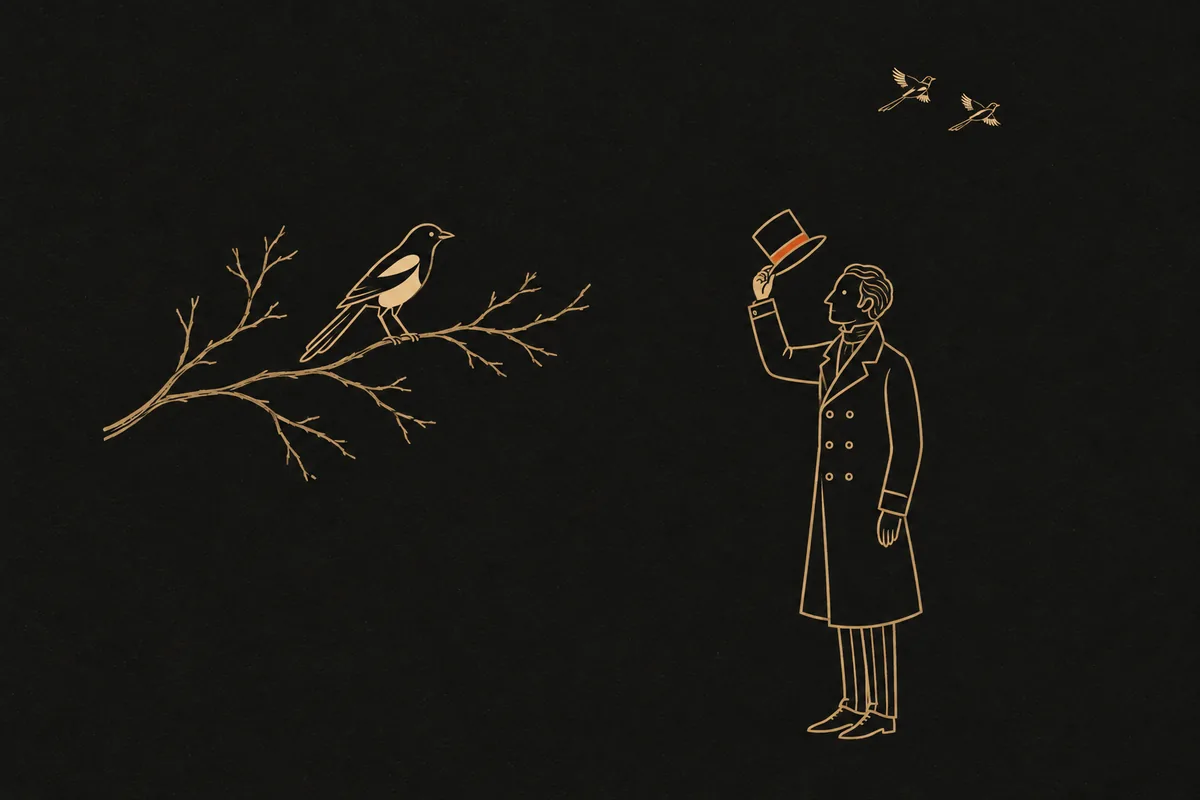
For as long as anyone in Britain has written it down, people have counted magpies. "One for sorrow, two for mirth, three for a wedding, four for death" was first printed in 1780, in a supplement to Shakespeare; the version with "seven for a secret never to be told" came later. A lone magpie was bad news, so you bowed to it, lifted your hat, crossed your thumbs, or spat three times over your right shoulder. Everyone had a cure.
The chemist Humphry Davy, who liked fishing, gave the plain reason in 1828: in cold weather only one bird leaves the nest to forage, in mild weather both do. Two magpies simply meant good weather. The omen was a thermometer with feathers.
The bird that talks
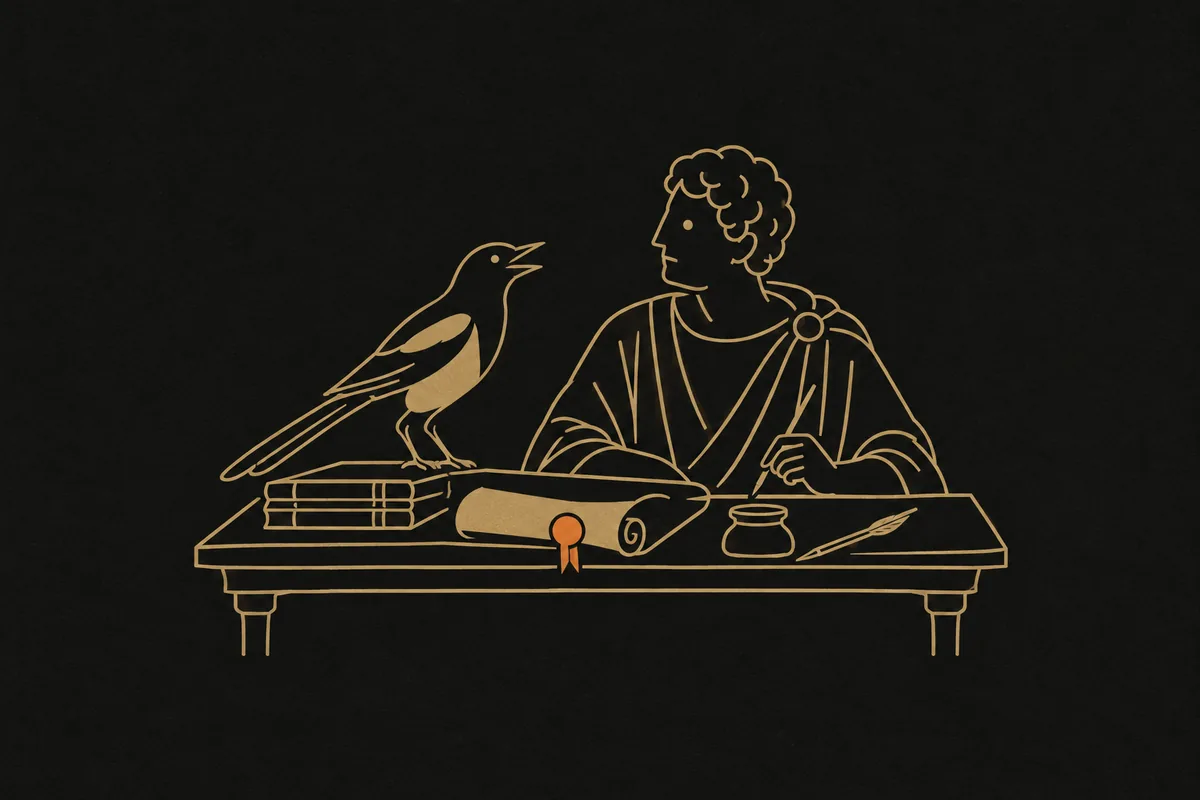
Pliny the Elder wrote that magpies speak more clearly than parrots, love the words they learn, and that one died of grief over a word it could not pronounce. Ovid turned the nine Pierides, who lost a singing contest to the Muses, into magpies, so they could keep chattering in the woods for ever. Shakespeare's "magot-pies" are augurs in Macbeth.
In Russian villages the same chatter had the same meaning: «сорока сокочет — гостей пророчит». The magpie brought news on her tail, and the dialects called her a вещица, a seer-bird. If she chattered in the yard, someone was on the road to you.
Two natures
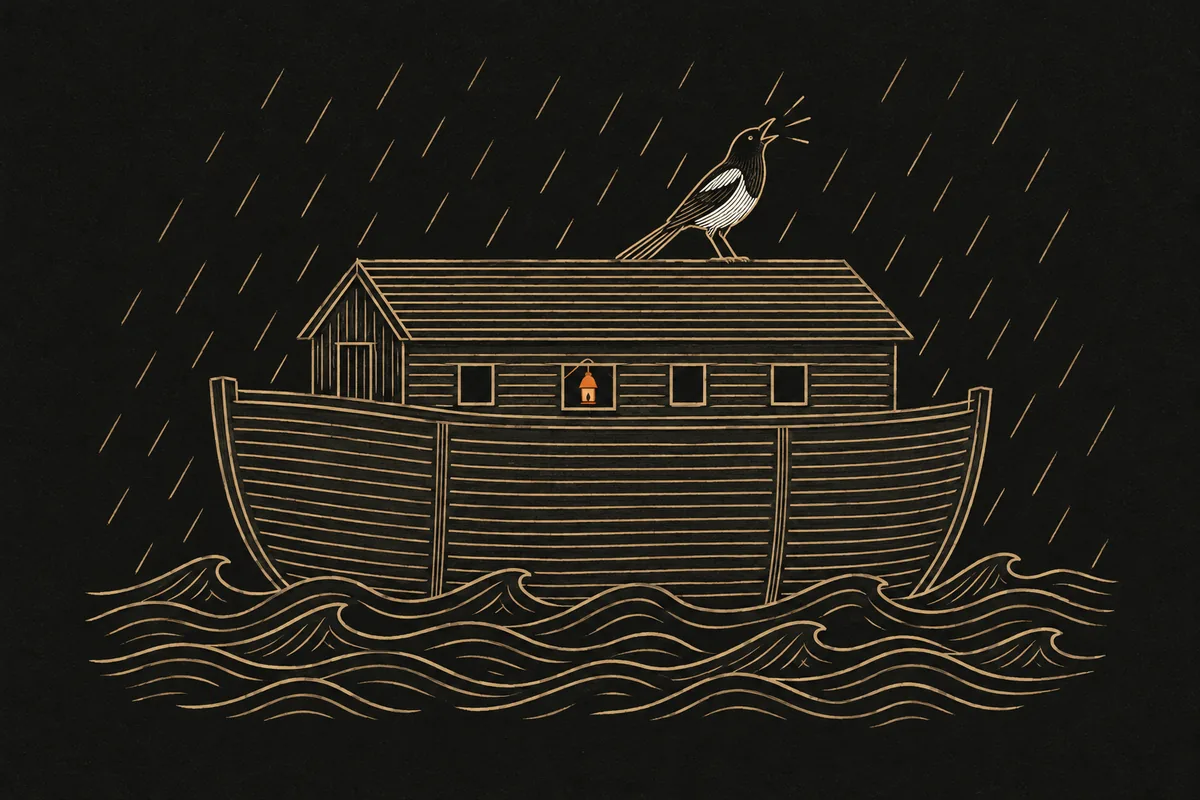
Half black, half white, and the stories split the same way. It was said in Scotland that the magpie carries a drop of the devil's blood under her tongue; in the north of England that she was the only bird that would not enter Noah's ark, and sat on the roof chattering over the drowning world; that she alone did not wear full mourning at the Cross. In Sweden witches flew to Blåkulla as magpies.
And yet in Norway and in West Sussex a magpie's nest in your tree meant the house was safe from storms. Moscow, says Dal's dictionary, has no magpies at all: a saint cursed them out of the city, either for stealing a flatbread from a fasting man's windowsill or for betraying the boyar Kuchka. The bird that knows too much is never quite trusted.
The bird of joy
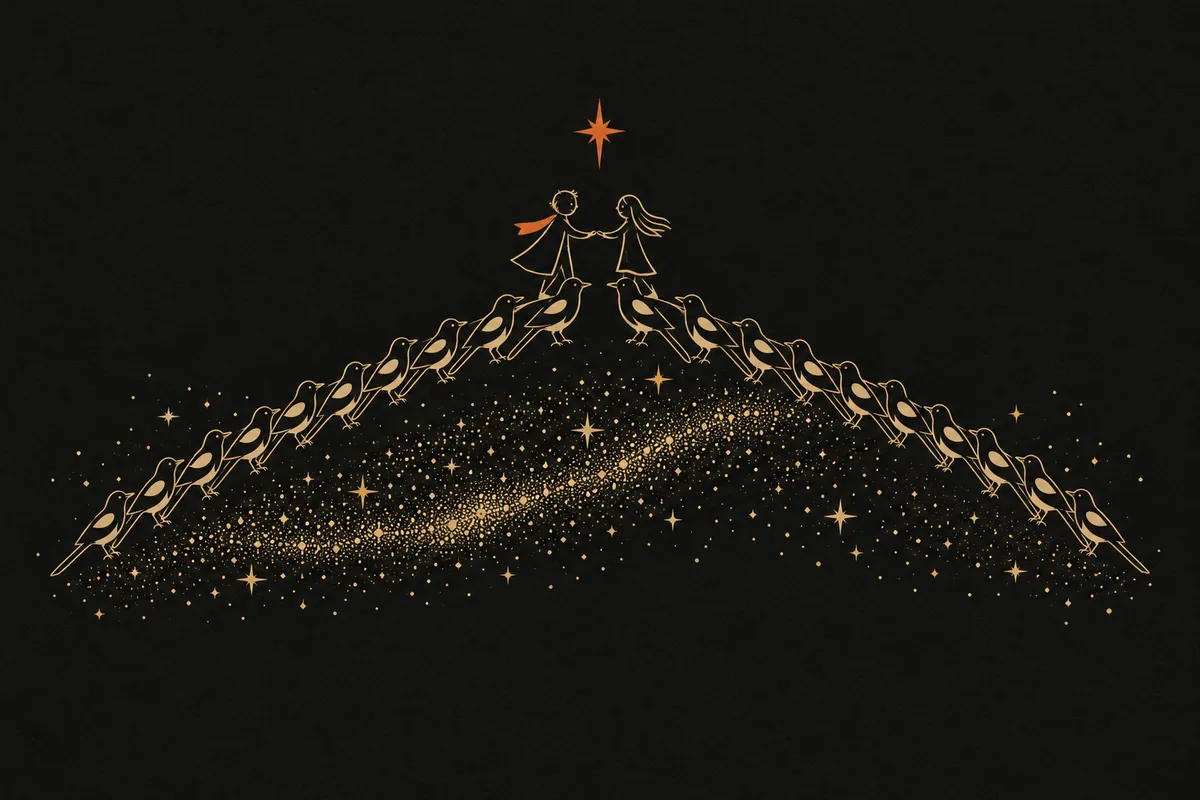
Go east and the omen flips. In Chinese the magpie is 喜鹊, the joy bird: "when the magpie chatters, the traveller arrives", wrote the Han scholars. On the seventh night of the seventh month, the magpies of the whole world fly up to make a bridge across the Milky Way so the Weaver Girl can cross to her Cowherd. In Korea the magpie brings good news; at New Year a painting of a tiger and a magpie hung on the gate, and a child threw a lost milk tooth onto the roof and asked the magpie for a new one.
The Manchu went further. Their founding chronicle says a divine magpie dropped a red fruit into the lap of a heavenly maiden, and from that fruit the first ancestor was born. For that, no Manchu would kill a magpie.
What the scientists found
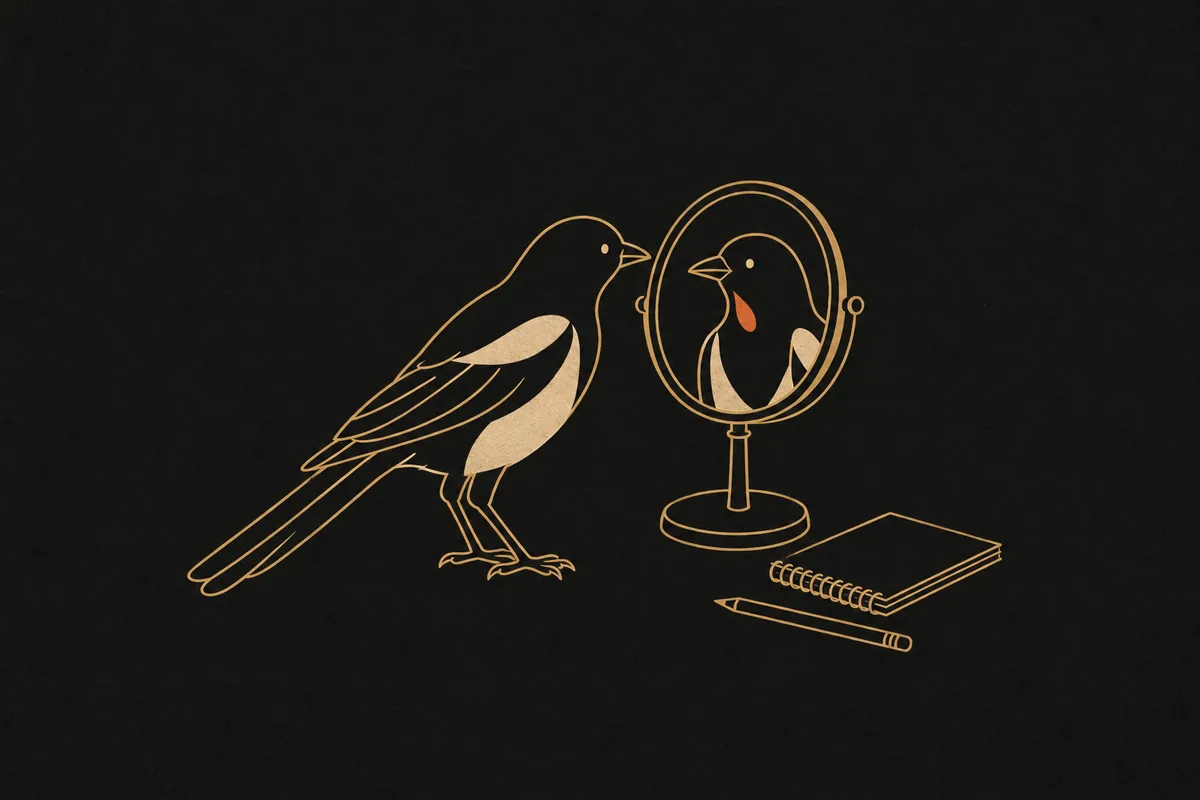
The stories agree on one thing: this bird is clever. In 2008 five magpies were shown a mirror with a coloured mark on their throat, visible only in the glass; they went for the mark, which only great apes, dolphins and elephants had done before. In 2015 researchers in Exeter tested the famous thief: wild magpies were not drawn to shiny objects at all. They were wary of anything new. The thief was a story. The mind was real.
Our magpie
Our magpie does what magpies are famous for and what the science says they don't: she takes the shiny things you bring, your signs, your cards, your runes, the lines of your hand, keeps them in her casket, and hands you back a note. Dry, warm, concrete. Entertainment and a reason to think, nothing more. 18+.